

Blog

Common CNC Machining Problems and How the Right Cutting Tools Can Solve Them
Summary
Most CNC machining problems poor surface finish, tool chipping, excessive tool wear, chatter and inconsistent tolerances trace back to one root cause more often than machinists expect: the wrong cutting tool for the job. This guide breaks down the most common cutting tool problems on the shop floor, what’s actually causing them and how proper CNC tool selection with the right geometry, coating and grade can fix them, featuring how EazyCut solid carbide tooling and Sandvik precision tools solve these problems in real production environments.
Table of Contents
- Why Most CNC Problems Are Actually Tooling Problems
- Problem 1: Poor Surface Finish
- Problem 2: Tool Chipping
- Problem 3: Excessive Tool Wear
- Problem 4: Chatter and Vibration
- Problem 5: Chip Recutting and Poor Chip Evacuation
- Comparison Table: Problem vs Root Cause vs Tooling Fix
- CNC Tool Selection Checklist
- Recent Trends Improving CNC Productivity
- How EazyCut and Sandvik Solve These Problems
- FAQs
- Conclusion
1. Why Most CNC Problems Are Actually Tooling Problems
Walk onto almost any shop floor dealing with scrap, rework, or missed cycle-time targets, and the conversation usually starts with the machine, the program, or the operator. But a large share of recurring CNC machining problems trace back to a mismatch between the cutting tool and the job — wrong flute count, wrong coating for the material, worn inserts left in service too long, or a tool geometry that was never right for the operation in the first place.
This matters because tooling is one of the few variables a shop can fix without touching the machine or the part program. Correct CNC tool selection routinely resolves surface finish complaints, chipping, and premature wear issues that otherwise get blamed on the machine or written off as “just how this material cuts.”
2. Problem 1: Poor Surface Finish
Poor surface finish shows up as tool marks, chatter marks, tearing, or an inconsistent Ra value, and it’s rarely caused by just one thing.
The most common contributors:
- Worn inserts or dull cutting edges that rub instead of shear
- Wrong nose radius or chip breaker geometry for the finishing pass
- Feed rate too aggressive for the finishing operation
- Vibration from excessive tool overhang or weak workholding
Tooling fix: Move to a coated carbide insert or solid carbide tool matched to the material, use a finishing-specific chip breaker geometry, and keep tool overhang as short as the operation allows. For non-ferrous and gummy materials like aluminium, polished-flute solid carbide tooling significantly reduces built-up edge, which is one of the most common causes of poor finish.
3. Problem 2: Tool Chipping
Tool chipping happens when the cutting edge experiences a shock load it isn’t built to absorb interrupted cuts, entry/exit impact or a mismatch between edge toughness and material hardness. Typical causes:
- Wrong carbide grade for the material (too hard/brittle for interrupted cuts)
- Excessive feed rate or depth of cut for the tool’s edge strength
- Sharp, unsupported cutting edges used on abrasive or interrupted-cut materials like cast iron
- Coolant applied inconsistently, causing thermal shock at the edge
Tooling fix: Select a tougher carbide substrate with a reinforced edge prep (a light chamfer or hone) for interrupted cuts and castings, and match coating chemistry to the material rather than defaulting to a general-purpose coating. This is exactly where correctly specified solid carbide end mills make a measurable difference over generic tooling.
4. Problem 3: Excessive Tool Wear
Excessive tool wear shortens tool life, drives up cost per part and if left unmanaged, silently degrades dimensional accuracy before anyone notices.
Common drivers:
- Wrong coating for the heat and abrasion profile of the material
- Cutting speed too high for the tool’s heat resistance
- Continuing to run a tool well past its optimal wear limit
- Insufficient or inconsistent coolant delivery
Tooling fix: Match coating to the failure mode. AlTiN/TiAlN coatings for heat-driven wear on steel and stainless, abrasion-resistant coatings for cast iron and set a defined tool-change interval based on measured flank wear (VB) rather than running tools to failure. Premium-grade carbide substrates typically extend tool life 2–4x over generic alternatives in production environments.
5. Problem 4: Chatter and Vibration
Chatter isn’t just noise it’s a self-exciting vibration that leaves a wavy surface, increases cutting forces and accelerates tool wear. It’s often misdiagnosed as a machine rigidity problem when the tool geometry is the actual trigger:
- Tool overhang longer than necessary for the operation
- Standard-helix tooling used at aggressive depths of cut
- Insert or tool not matched to the machine’s speed/power envelope
Tooling fix: Variable-helix and variable-pitch tool designs disrupt the harmonic vibration pattern that causes chatter, letting shops run higher feeds without the wavy surface finish or edge damage that comes with standard-geometry tools.
6. Problem 5: Chip Recutting and Poor Chip Evacuation
When chips aren’t cleared fast enough, the tool re-engages with its own chips, damaging both the part surface and the cutting edge. This is especially common in deep pockets and slotting operations.
Tooling fix: Use tooling with flute geometry and coating specifically designed for chip flow in the material being cut, higher helix and polished flutes for aluminium, robust chip-breaker geometry for steel, combined with toolpath strategies like climb milling and adequate air blast or coolant flow.
7. Comparison Table: Problem vs Root Cause vs Tooling Fix
| CNC Machining Problem | Most Common Root Cause | Tooling Fix |
|---|---|---|
| Poor surface finish | Worn edge, wrong nose radius, excess overhang | Sharp coated/carbide tool, correct chip breaker, reduced overhang |
| Tool chipping | Wrong carbide grade, shock load, interrupted cuts | Tougher substrate, reinforced edge prep, matched coating |
| Excessive tool wear | Wrong coating, high heat, tool run past its limit | Material-matched coating, defined tool-change interval |
| Chatter and vibration | Long overhang, standard-helix geometry | Variable-helix/variable-pitch tooling, shorter overhang |
| Chip recutting | Poor chip evacuation, wrong flute geometry | Material-specific flute design, climb milling, coolant/air blast |
8. CNC Tool Selection Checklist
Before specifying a new cutting tool for a job, run through these five checks; this is the fastest route to fixing recurring cutting tool problems at the source:
- Does the flute count and helix angle match the material’s chip behaviour?
- Is the coating matched to the material’s heat and abrasion profile?
- Is the carbide grade tough enough for interrupted cuts, if applicable?
- Is tool overhang minimised for the operation’s rigidity requirements?
- Is there a defined wear-based tool-change interval, rather than running to failure?
9. Recent Trends Improving CNC Productivity
Shops focused on improving CNC productivity are increasingly leaning on tooling technology rather than just machine upgrades:
- High-efficiency milling (HEM) toolpaths paired with tooling engineered for light radial/heavy axial depths of cut are letting shops cut cycle times without sacrificing tool life.
- Application-specific, tailor-made tooling is replacing generic catalog tools for difficult materials like Inconel, duplex stainless, and hardened tool steel, where off-the-shelf geometry leaves performance on the table.
- Condition-based tool changes, driven by measured wear data rather than fixed intervals, are reducing both premature tool changes and unplanned chipping failures.
- Multi-layer nano-coatings are extending tool life further under the same cutting parameters, particularly in stainless and hardened-steel applications.
10. How EazyCut and Sandvik Solve These Problems
Solving recurring CNC machining problems consistently comes back to one thing: tooling engineered for the specific material and operation, not generic, one-size-fits-all cutters.
- EazyCut — Sanjay Tools’ own manufacturing line of tailor-made solid carbide tooling, built specifically to address chipping, wear and finish problems on cast iron, steel, stainless steel, Inconel and duplex stainless steel, with material-matched geometry and in-house developed coatings rather than off-the-shelf specs.
- Sandvik — a global leader in precision metal-cutting tools for turning, milling, drilling, and boring, offering the engineered inserts, grades, and holder systems needed to solve chatter, wear, and finish issues across demanding production environments.
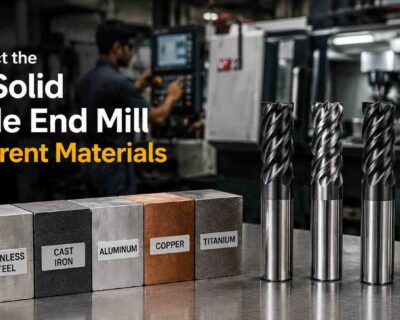
Browse the full tooling range in the Shop, or get application-specific tool recommendations through Get a Quote. For more on getting the most from your tooling investment, see our related posts on selecting the right solid carbide end mill for different materials and why tool life matters more than tool price in modern CNC machining.
11. FAQs
1. How do I know if my CNC problem is tooling-related or machine-related?
A. Start by swapping to a known-good, correctly specified tool for the operation. If the problem (poor finish, chatter, chipping) disappears or improves significantly, it’s tooling-related. If it persists with a properly matched tool, the issue is more likely machine rigidity, workholding or programming.
2. What causes tool chipping specifically on cast iron?
A. Cast iron’s interrupted, abrasive cutting action puts repeated shock loads on the cutting edge. A carbide grade that’s too hard and brittle for interrupted cuts or a sharp, unsupported edge without a chamfer or hone is the most common cause of chipping on this material.
3. How often should I change a cutting tool to avoid excessive wear-related defects?
A. Rather than a fixed time interval, base tool changes on measured flank wear (VB) against a defined limit for your application this catches wear-driven finish and dimensional problems before they affect parts, without discarding tools prematurely.
4. Can better cutting tools actually improve CNC productivity, or is that mostly about the machine?
A. Tooling is one of the highest-leverage productivity levers available, since correctly matched tools allow higher feeds and speeds, longer runs between changes and fewer scrapped parts, often without any change to the machine itself.
5. Why does my surface finish get worse over a long production run even though I haven’t changed anything?
A. This is almost always progressive tool wear as the cutting edge dulls; it starts rubbing rather than shearing the material, which degrades finish gradually rather than suddenly. Tracking wear against a defined limit and scheduling tool changes accordingly prevents this drift.
12. Conclusion
Most CNC machining problems from poor surface finish and tool chipping to excessive tool wear and chatter aren’t random. They’re the predictable result of a cutting tool that wasn’t matched to the material, the operation or the cutting conditions it was asked to handle. Getting CNC tool selection right, backed by the correct geometry, grade and coating, is consistently one of the fastest ways to solve cutting tool problems and start improving CNC productivity without touching the machine or the program.
Struggling with recurring tooling problems on the shop floor? Get a free tooling consultation with EazyCut and Sandvik specialists to match the right tool to your application.