


Blog
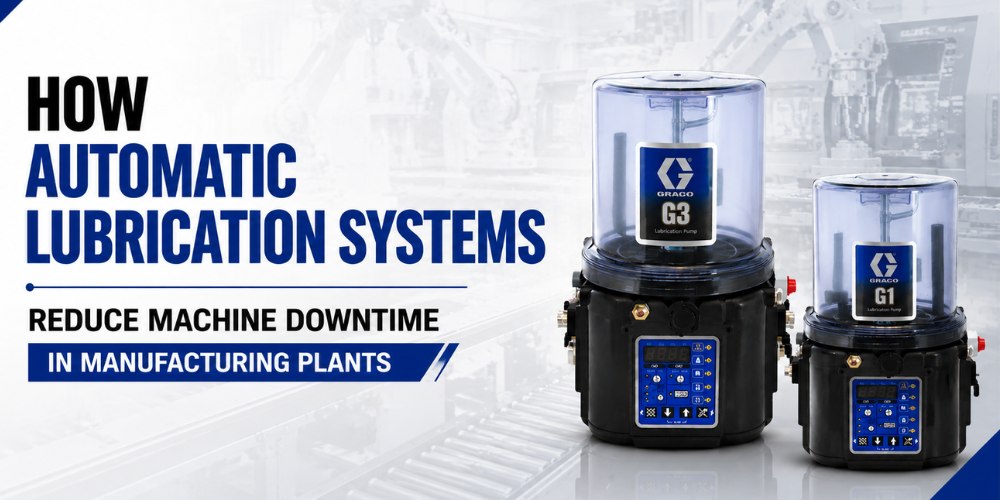
How Automatic Lubrication Systems Reduce Machine Downtime in Manufacturing Plants
Summary
In a manufacturing plant, downtime does not always begin with a major breakdown. More often, it starts with small lubrication misses that go unnoticed. A bearing runs dry for a while. A slide gets extra friction. A point is skipped during a rushed shift. At first, nothing looks serious. Then the machine starts heating up, noise increases, wear builds faster than expected and production stops at the worst possible time. Automatic lubrication systems are built to prevent exactly that chain of problems by delivering lubricant in a controlled way while the machine is running.
For plant teams, the real value is not just convenience. It is steadier uptime, fewer lubrication-related failures, less manual intervention, and more predictable maintenance planning. That is why automatic lubrication systems have become a practical choice in plants where machines run long hours and stopping for routine greasing is expensive.
Table of Contents
- Why lubrication-related downtime keeps showing up in plants
- What automatic lubrication systems actually do
- How automatic lubrication systems reduce downtime
- Where automatic lubrication systems make the biggest difference
- What smart buyers check before choosing a system
- Relevant products and support from Sanjay Tools
- Final thoughts
- FAQs
1. Why lubrication-related downtime keeps showing up in plants
Manual lubrication looks simple on paper, but on a busy shop floor it is easy to miss a point, over-grease a component or let a scheduled cycle slip during a production rush. Industrial suppliers write about these same weaknesses repeatedly because they cause friction, heat, wear and eventually unplanned stoppage. SKF and Graco both stress that the biggest losses come from inconsistent lubrication, missed points and too much or too little grease.
The hidden cost is not only the repair. Every lubrication-related stop also breaks the rhythm of production. A short pause becomes a lost batch, a delayed dispatch or extra rework. In many plants, the real problem is not that lubrication exists. It is that it is not consistent enough to protect the machine every time.
2. What automatic lubrication systems actually do
Automatic lubrication systems are centralized setups that supply the correct lubricant to the correct point at the correct time while the equipment is operating. SKF describes this as getting the right lubricant, in the right quantity to the right point at the right time. Bijur Delimon also positions automatic lubrication as a way to keep equipment moving while reducing wear on vital components.
In simple plant terms, the system takes the human guesswork out of greasing. Pumps, valves, metering devices, lines and controllers work together so lubrication happens on schedule instead of when someone remembers to do it. That is what makes automatic lubrication systems more dependable than manual greasing in long-running industrial environments.
3. How automatic lubrication systems reduce downtime
The strongest advantage is consistency. Graco, SKF and Bijur Delimon all show that automatic lubrication systems reduce unplanned downtime, lower maintenance costs and improve uptime because the machine receives lubricant while it is in operation. That means fewer stops for routine greasing and fewer failures caused by dry running or irregular lubrication.
Here is the practical logic:
| Plant problem | What usually happens | How automatic lubrication helps |
| Missed lubrication point | Wear increases quietly | Lubricant reaches the point on schedule |
| Under-lubrication | Friction and heat rise | The machine gets lubricant before damage builds |
| Over-lubrication | Seals get stressed | Delivery stays controlled |
| Manual greasing stoppage | Production time is lost | Lubrication happens while equipment runs |
SKF also notes that automatic lubrication supports lower labor usage and lower lubricant consumption, while Graco highlights productivity, durability, safety and lower maintenance cost as direct benefits.
4. Where automatic lubrication systems make the biggest difference
Automatic lubrication systems matter most where access is difficult, equipment runs continuously or maintenance stoppage is costly. SKF and Bijur Delimon both show this clearly in applications such as cranes, robots, trucks, conveyors, motors, pumps and heavy-duty equipment, where lubrication points are not easy to service by hand.
That is why plants often see the biggest benefit in the following areas:
- conveyor lines
- CNC and machining support equipment
- heavy machinery
- robot cells
- cranes and lifting systems
- process lines that cannot be stopped often
In these environments, automatic lubrication systems do more than reduce work. They protect the machine from lubrication gaps that would otherwise turn into breakdowns later.
5. What smart buyers check before choosing a system
A good automatic lubrication system is not selected by pump size alone. The first questions should be: how many points need lubrication, what lubricant is used, how long the machine runs and whether the points are easy or hard to access. SKF’s lubrication management guidance is built around that same idea: proper lubrication depends on timing, quantity, point and lubricant choice.
A simple selection flow looks like this:
- Identify the critical lubrication points.
- Check machine duty cycle and access.
- Match lubricant type and delivery method.
- Choose the pump, valve and distribution setup.
- Set the interval and monitor performance.
That is the point where many plants get better results. They stop treating lubrication as a side task and start treating it as part of machine reliability.
6. Relevant products and support from Sanjay Tools
For plants looking at this category, Sanjay Tools offers Graco lubrication products and lubrication equipment, including automatic lubrication pumps, divider valves, grease transfer pumps and hose reels. Their site also positions Graco around grease guns, fluid handling equipment, pumps and efficiency improvement.
That matters because automatic lubrication systems are rarely a one-product decision. The real job is to match the pump, divider, metering, grease path and service support to the plant’s operating conditions. When the system is built correctly, the equipment stays cleaner, easier to maintain and more reliable over time.
7. Final thoughts
Automatic lubrication systems reduce downtime because they remove the biggest weakness in manual greasing: inconsistency. They keep lubricant flowing to the right point while the machine is running, which lowers wear, improves uptime, reduces maintenance interruptions and helps plant teams plan better. In manufacturing, that combination is often more valuable than any single repair fix because it prevents the problem before production is lost.
For manufacturers that want to move from reactive greasing to a more reliable setup, Sanjay Tools can support the selection of Graco lubrication equipment and automatic lubrication components suited to the application.
8. FAQs
- Why do automatic lubrication systems reduce downtime?
A. They deliver lubricant on schedule while the machine is operating, which reduces missed lubrication points and lubrication-related failures. - Are automatic lubrication systems useful for continuously running machines?
A. Yes. Competitor content repeatedly emphasizes applications where equipment runs often or access is difficult, such as robots, cranes, conveyors, trucks and heavy machinery. - What is the main difference between manual and automatic lubrication?
A. Manual lubrication depends on people and timing, while automatic lubrication supplies the right amount of lubricant at the right time without stopping the equipment. - Can automatic lubrication reduce maintenance cost as well?
A. Yes. Graco, SKF and Bijur Delimon all connect automatic lubrication with lower maintenance cost, less labor, lower lubricant use and improved equipment life. - Which products are relevant for this topic from Sanjay Tools?
A. Graco automatic lubrication pumps, divider valves, grease transfer pumps, hose reels and lubrication equipment are the most relevant categories on the site.