

Blog
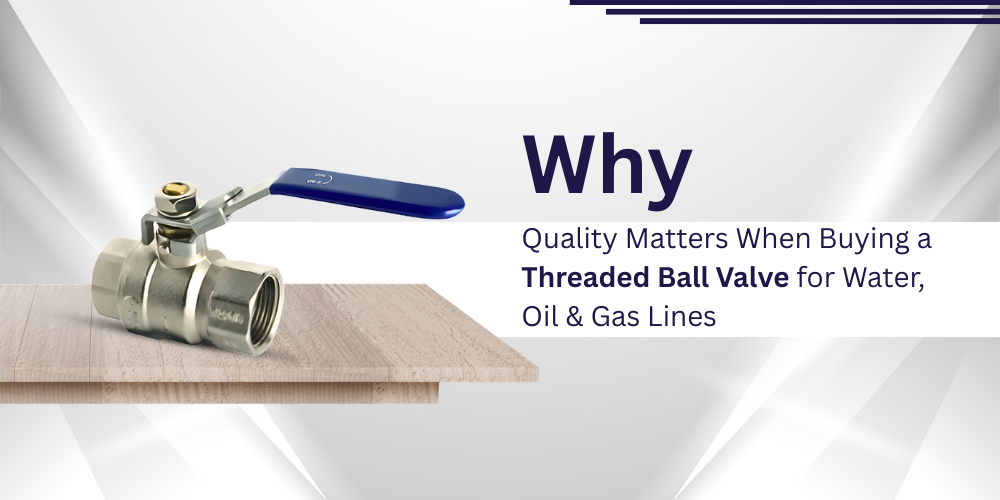
Why Quality Matters When Buying a Threaded Ball Valve for Water, Oil and Gas Lines
Summary
Threaded ball valves are small components in a piping system, but their impact is anything but small. Whether the line carries water, oil or gas, the valve controls isolation, flow reliability, and system safety. When a valve performs poorly, the result isn’t just leakage it becomes downtime, contamination, pressure instability and sometimes serious operational risk.
In real industrial environments, valve quality determines how long a system runs without interruption. Maintenance teams quickly learn that low-grade valves may look similar on the outside but behave very differently under pressure, temperature variation and repeated operation.
This guide explains in practical engineering terms what makes a threaded ball valve reliable, what failures occur with inferior products and how quality directly affects lifecycle cost and system safety across water, oil and gas applications.
Table of Contents
- The Role of Threaded Ball Valves in Fluid Systems
- What Defines a High-Quality Threaded Ball Valve
- Risks of Using Low-Grade Valves
- Application-Specific Demands: Water, Oil and Gas Lines
- Engineering Factors Buyers Should Evaluate
- Lifecycle Cost vs Purchase Price
- Why Technical Supplier Support Matters
- Final Thoughts
1. The Role of Threaded Ball Valves in Fluid Systems
A threaded ball valve is designed to provide quick, reliable shutoff or flow control in piping networks. Its function appears simple rotate the handle to open or close but internally, precision sealing and machining are what prevent leakage under pressure.
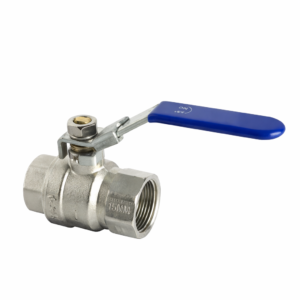
These valves are commonly used where:
- Maintenance isolation is required
- Equipment protection is necessary
- Fluid flow must be controlled safely
A valve failure at any of these points disrupts the entire system.
2. What Defines a High-Quality Threaded Ball Valve
Not all valves are manufactured to the same engineering standards. A quality valve is built around precision and durability.
Key construction characteristics include:
Material Integrity
High-grade brass or stainless steel resists corrosion, pressure fatigue, and chemical interaction.
Machined Threads
Accurate threading ensures tight pipe engagement without stripping or misalignment.
Sealing Performance
Quality seats and seals maintain leak-free operation under repeated cycles.
Pressure Capability
A valve must withstand system pressure without deformation.
Smooth Operation
Consistent handle movement indicates proper internal alignment.
Together, these features determine whether a valve remains reliable over years of service or fails prematurely.
3. Risks of Using Low-Grade Valves
Lower-cost valves often compromise internal machining and sealing materials. Problems typically appear after installation not during inspection.
Common failure issues include:
- Micro-leakage under pressure
- Thread wear or stripping
- Seal hardening
- Flow restriction
- Sudden failure during thermal expansion
In water systems, this leads to wastage and corrosion. In oil lines, contamination risk increases. In gas applications, even minor leakage becomes a safety concern.
Maintenance teams spend more time replacing faulty valves than they save on purchase cost.
4. Application-Specific Demands: Water, Oil and Gas Lines
Each fluid environment places different stresses on a valve.
Water Systems
Exposure to scaling, corrosion, and pressure cycling requires material stability.
Oil Lines
Chemical compatibility and seal durability prevent swelling or degradation.
Gas Lines
Absolute sealing integrity is critical to prevent leakage and pressure loss.
A valve designed for one environment may not perform well in another. Matching valve qualityto application conditions prevents premature failure.
5. Engineering Factors Buyers Should Evaluate
When selecting a threaded ball valve experienced buyers look beyond price.
Key evaluation points include:
- Material specification
- Thread machining quality
- Seal design and durability
- Pressure rating
- Operating smoothness
- Compatibility with piping standards
A quick physical inspection combined with supplier documentation often reveals product quality.
6. Lifecycle Cost vs Purchase Price
Initial cost is only a small part of valve ownership. Inferior valves often cause:
- Leakage repairs
- Unplanned shutdowns
- Replacement labor
- Fluid loss
- Safety risk
A durable valve reduces maintenance frequency and operational disruption. Over time, the total cost of ownership favors higher-quality components.
7. Why Technical Supplier Support Matters
Valve selection is not just a purchasing decision it is an engineering decision. A knowledgeable supplier helps match valve specifications to operating conditions.
Technical support ensures:
- Correct material selection
- Proper pressure rating
- Installation compatibility
- Application guidance
This partnership prevents misapplication and improves system reliability.
8. Final Thoughts
Threaded ball valves may appear simple, but their performance influences the safety and efficiency of entire fluid systems. Choosing a high-quality valve protects equipment, reduces maintenance interruptions, and improves long-term operating stability.
Get expert guidance on industrial piping components.
FAQs
Q1. How do I know if a threaded ball valve is high quality?
A. Check material grade, machining precision, seal integrity and pressure rating. A smooth operation and proper documentation are good indicators.
Q2. Can I use the same valve for water, oil, and gas lines?
A. Not always. Each application has different chemical and pressure demands. Proper compatibility is essential.
Q3. What causes ball valve leakage?
A. Seal degradation, poor machining, thread damage, or pressure overload are common causes.
Q4. Are cheaper valves suitable for industrial use?
A. They may work temporarily but frequent failure and maintenance often outweigh initial savings.
Q5. How often should threaded ball valves be inspected?
A. Routine inspection during maintenance cycles helps detect early wear or leakage before failure occurs.